The History of Lantern Floating
01
The origins of Lantern Floating
"Shoryo-bune" (spirit boats) across Japan
Across Japan there is a custom, at the end of the Bon period, of floating small lanterns or straw boats on rivers and the sea — called "shoryo-bune" (spirit boats) or "shoryo-nagashi" (the sending-off of spirits). It has continued as a ritual to place the spirits of ancestors aboard the boats and send them safely back to the other world.
Hiroshima's distinctive "Bon lantern" culture
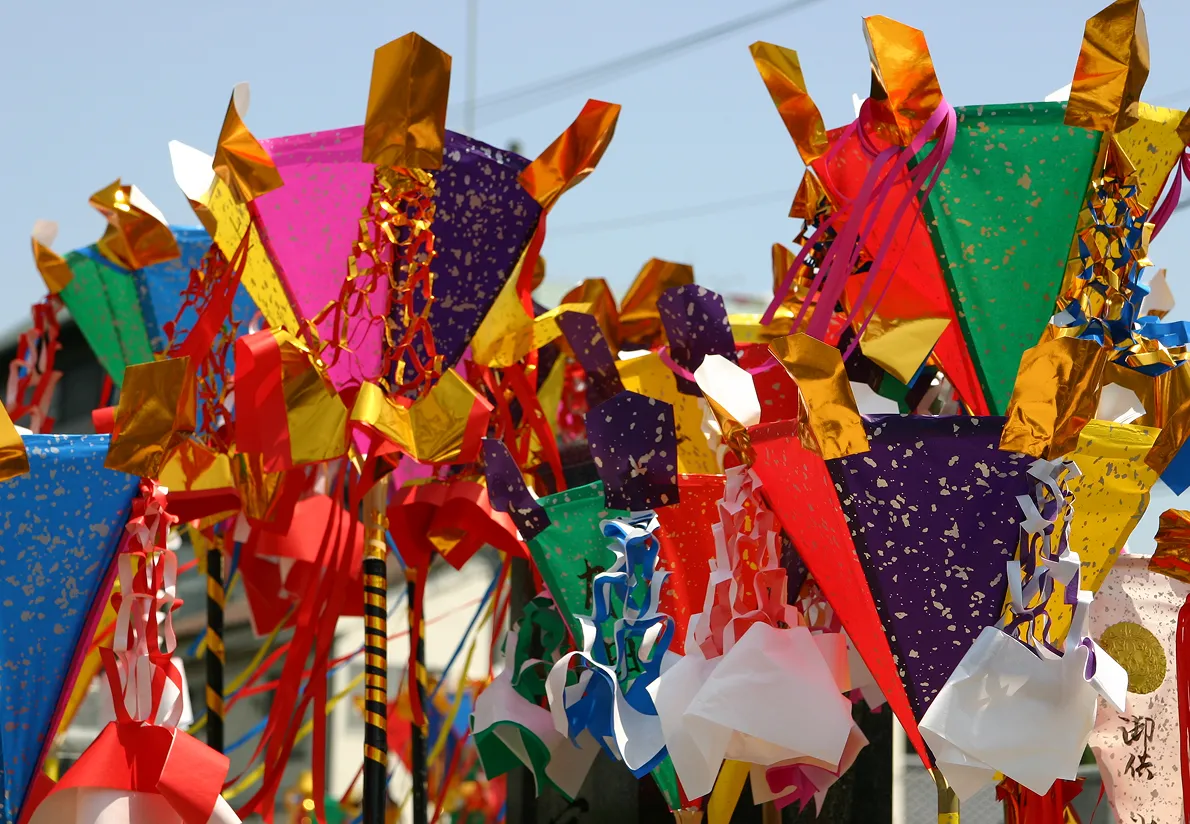
In Hiroshima there is a custom of the Jodo Shinshu Aki Monto (followers in the Aki region) of decorating graves with colorful lanterns during Bon, known as "Bon toro" (Bon lanterns). The blending of this Bon-lantern culture with the spirit-sending ritual is thought to be the prototype of today's "Lantern Floating."
For bereaved families, Lantern Floating carries the same meaning as visiting a grave during Bon — an important act of remembrance.
02
The atomic bombing and Lantern Floating
The light of the lanterns is the
"flame of life" of the many who died in the rivers
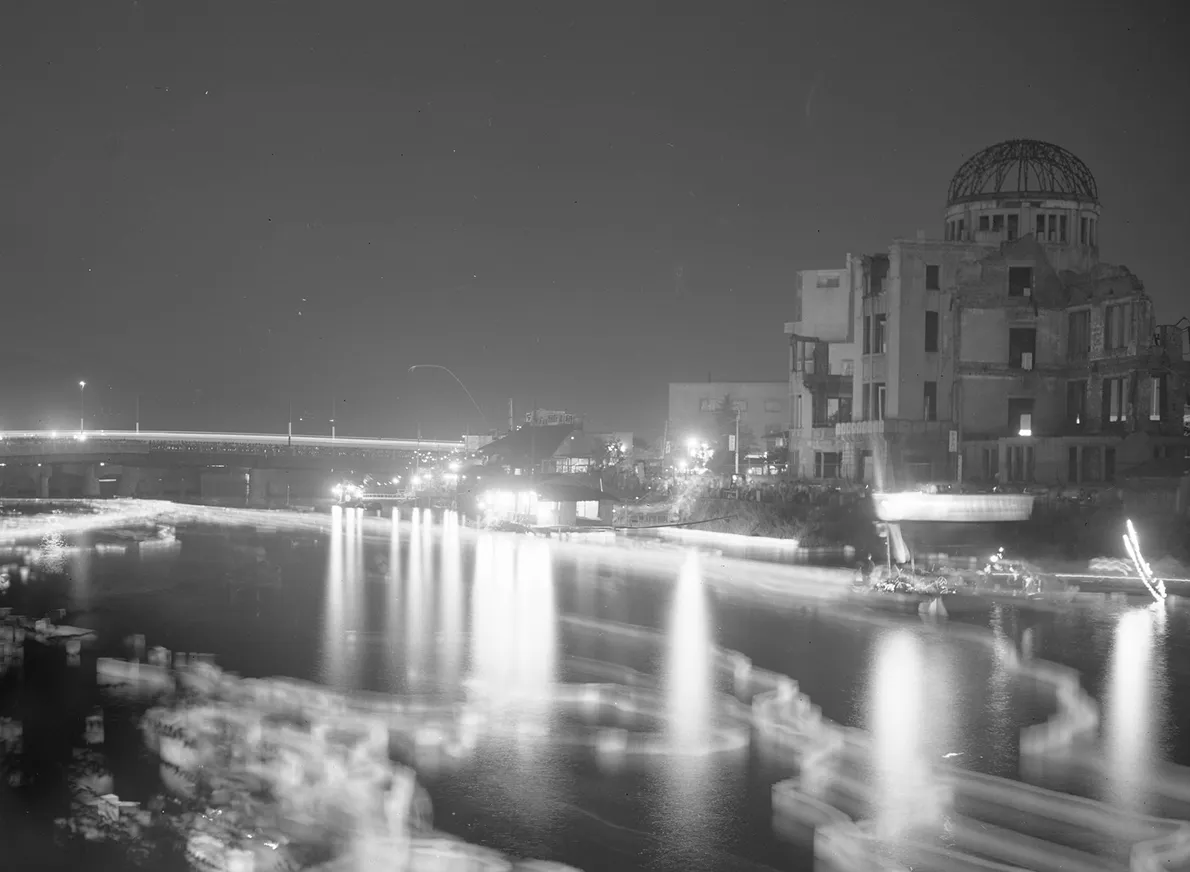
8:15 a.m., August 6, 1945. The atomic bomb was dropped on Hiroshima — the first in the world — and countless lives were taken in an instant. Among those who escaped instant death, many suffered terrible burns and, unable to bear the searing pain and thirst, entered the nearby rivers and died there.
Many bodies floated in the Motoyasu River as well, and many of those who remain missing are thought to have died in the rivers.
People who lost family members to the atomic bomb still continue, every year on August 6, to float lanterns. The light of the lanterns is also the "flame of life" of the many who died in the rivers.
03
The beginnings of Hiroshima Lantern Floating
Begun by citizens around 1947–1948
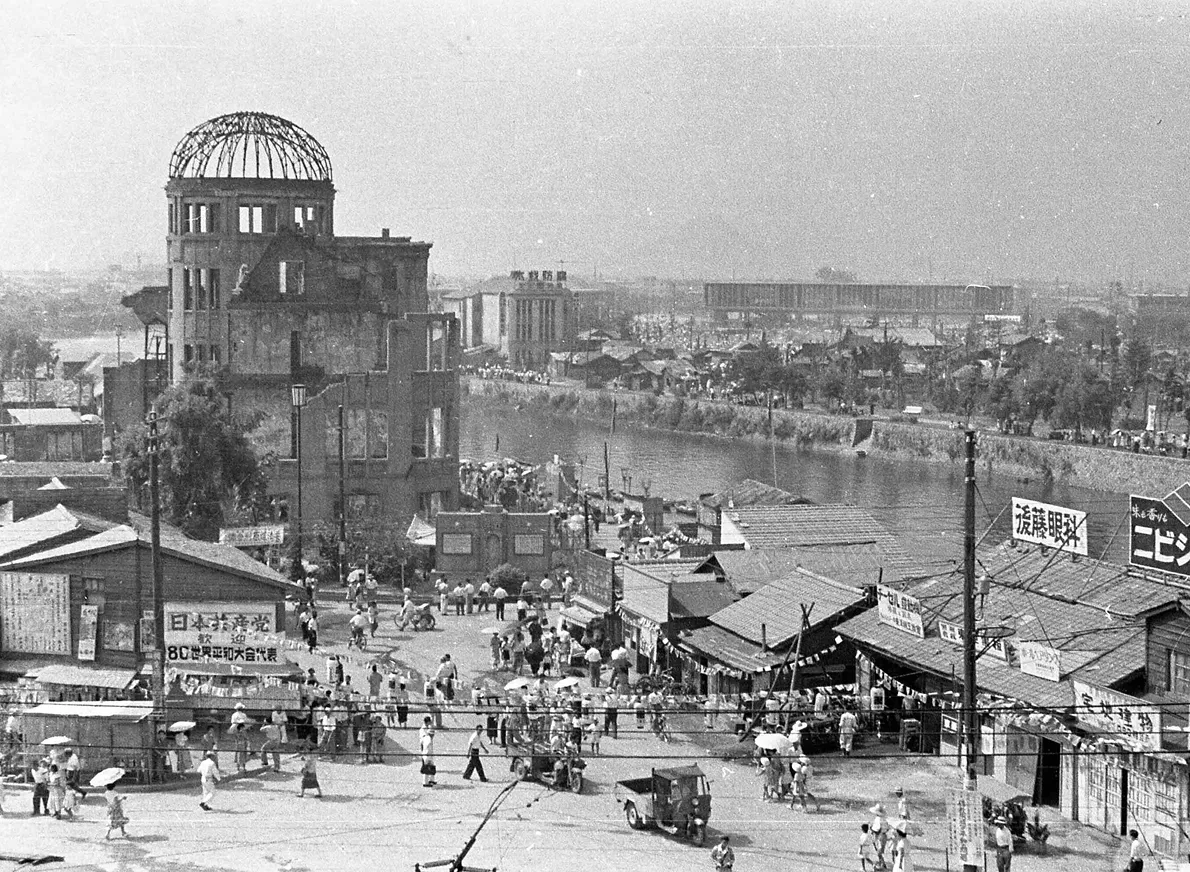
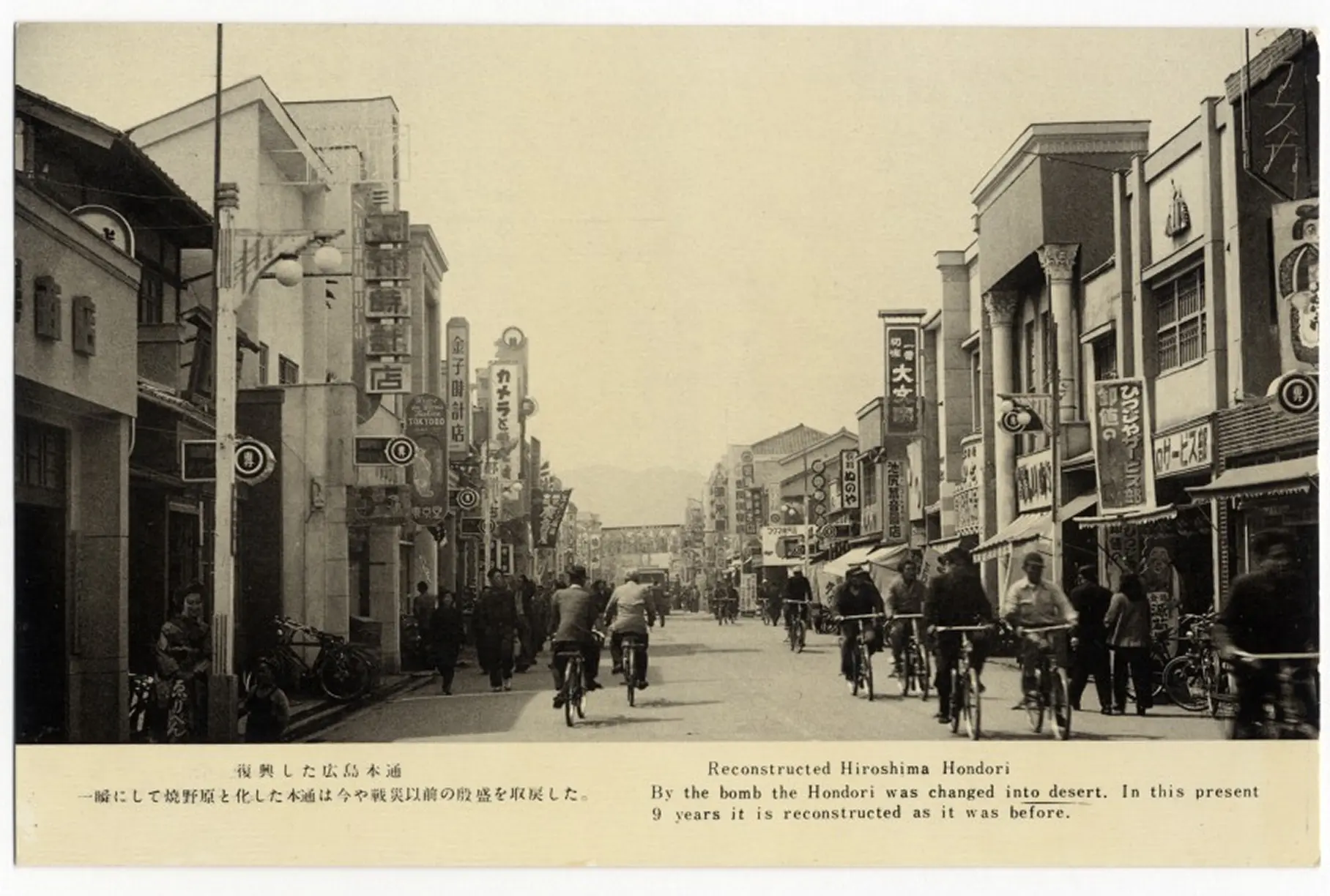
Around 1947–1948, when black markets bustled around stations such as Hiroshima, Yokogawa, and Koi, and barrack shops were just beginning to appear in the city center, bereaved families and citizens who had lost relatives and friends to the atomic bomb floated handmade lanterns on the river in mourning and remembrance. This is said to be the beginning of Hiroshima's "Lantern Floating."
Toward operation by lantern boats around 1955
At first, lanterns were floated from the narrow "gangi" (the riverside stone steps built along Hiroshima's rivers for boarding boats and unloading cargo), but as the number of participants grew this became dangerous. From around 1955, the shopping district took over operation as a project, and lanterns came to be floated from a "lantern boat."
Floating lanterns individually becomes possible again around 1996
In 1996, the waterside terrace on the Motoyasu River was developed, and ordinary people were once again able to float lanterns directly by themselves.
04
Once a festival celebrating Hiroshima's recovery
Around 1955, Hiroshima had become one of the fastest-growing cities in the country. It is said that, in those days, August 6 held two meanings for the people of the city: "remembrance by day; and from the evening, a festival celebrating the recovery."
In 1964, citing traffic congestion, the fireworks display was merged with the Hiroshima Port Festival, and from then on, only the lantern-floating event was held on August 6.
Around 1961–1962, some 20,000–30,000 lanterns were floated over three days, but today about 5,000–6,000 are floated, mainly on the Motoyasu River.
The floated lanterns are now collected downstream and disposed of, out of concern for the environment and for fisheries.
In the past, some lanterns are said to have drifted as far as Shikoku.
05
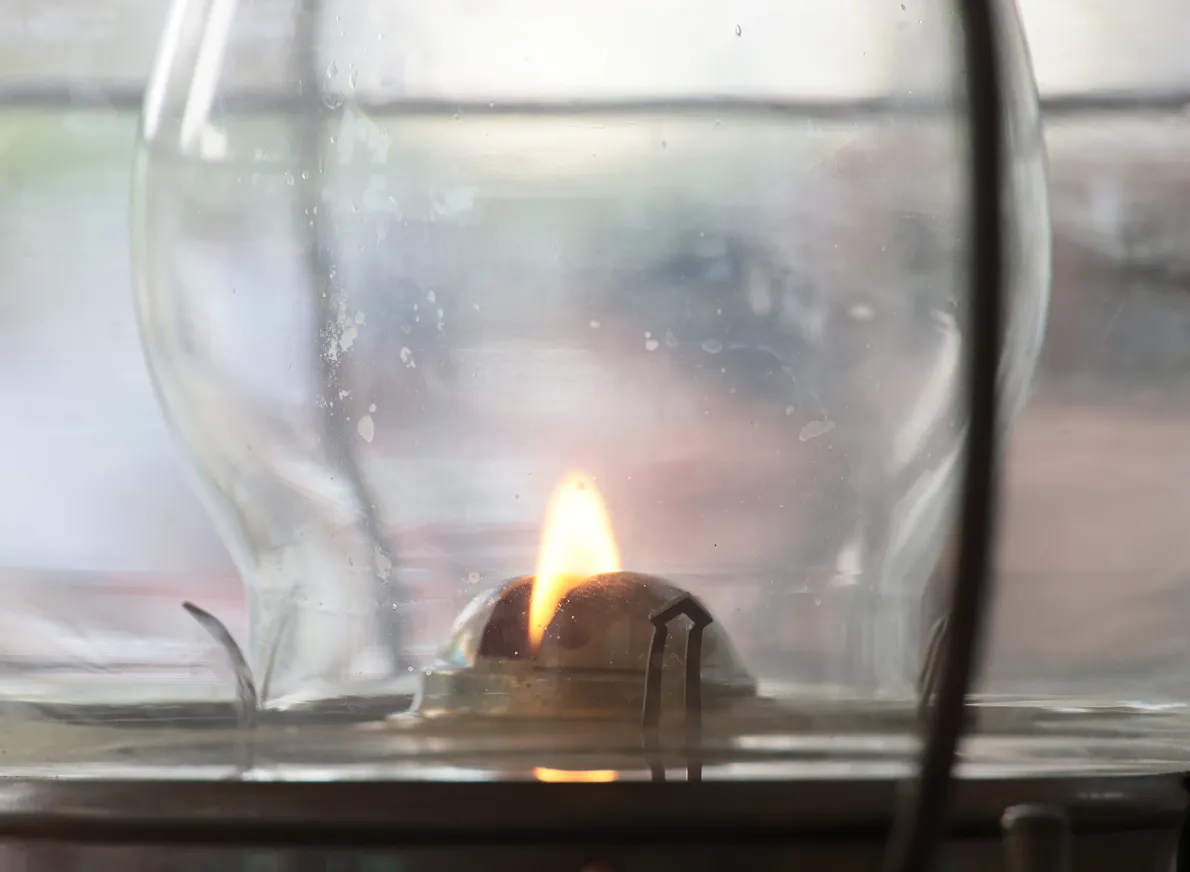
The flame of the lighting ceremony is the "ember of the atomic fire" that Tatsuo Yamamoto carried home to Fukuoka
Since 2001, the flame used in the lighting ceremony has been kindled from the "ember of the atomic fire."
One month after the bombing, the late Tatsuo Yamamoto (who passed away in 2005) transferred a fire still smoldering in the underground shelter of the Kinshodo bookstore — his uncle's shop on Hondori — to the charcoal of a hand warmer, and carried it home to Hoshino-mura in Yame, Fukuoka Prefecture.
That fire was kept by the Yamamoto family for 23 years, and in 1968 it was handed on to Hoshino-mura as a flame praying for peace.
It is still carefully preserved today within the memorial monument in Hoshino-mura.
*Beginning in 2026, the flame used in the lighting ceremony has been kindled from the Flame of Peace.
06
The feelings written on the lanterns
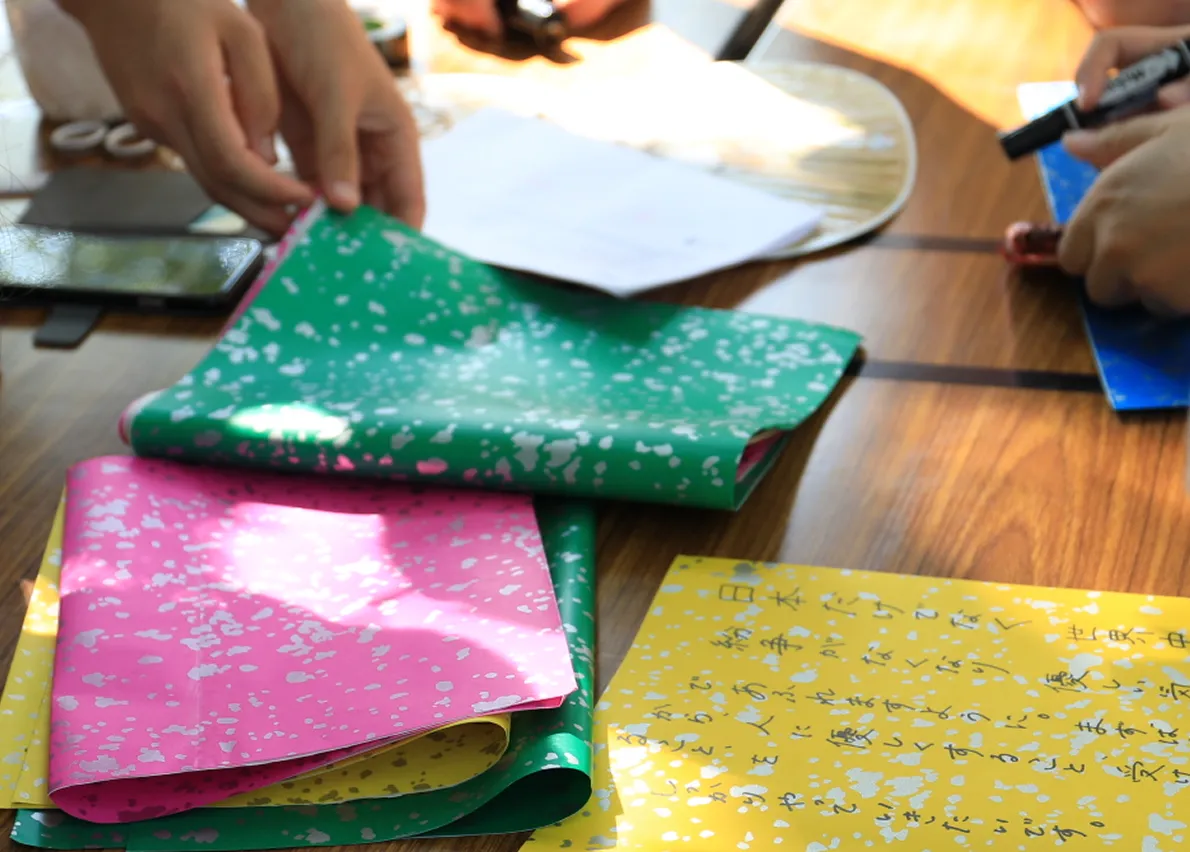
On the lanterns, it is common to write the names of the deceased (their Buddhist name or secular name) and the name of the person floating the lantern.
In recent years, more and more visitors from Japan and abroad have come to write their "hopes for peace."
Over its long history, Hiroshima Lantern Floating has become an event that carries both meanings — "remembrance" and "messages supporting peace."
The lantern paper comes in red, blue, yellow, pink, orange, green, or white, and since 2013 you can also choose "Orizuru recycled paper," made from the paper cranes offered at the Children's Peace Monument.
07
The people who keep it running
Run by Hiroshima's shopping districts
and many volunteers
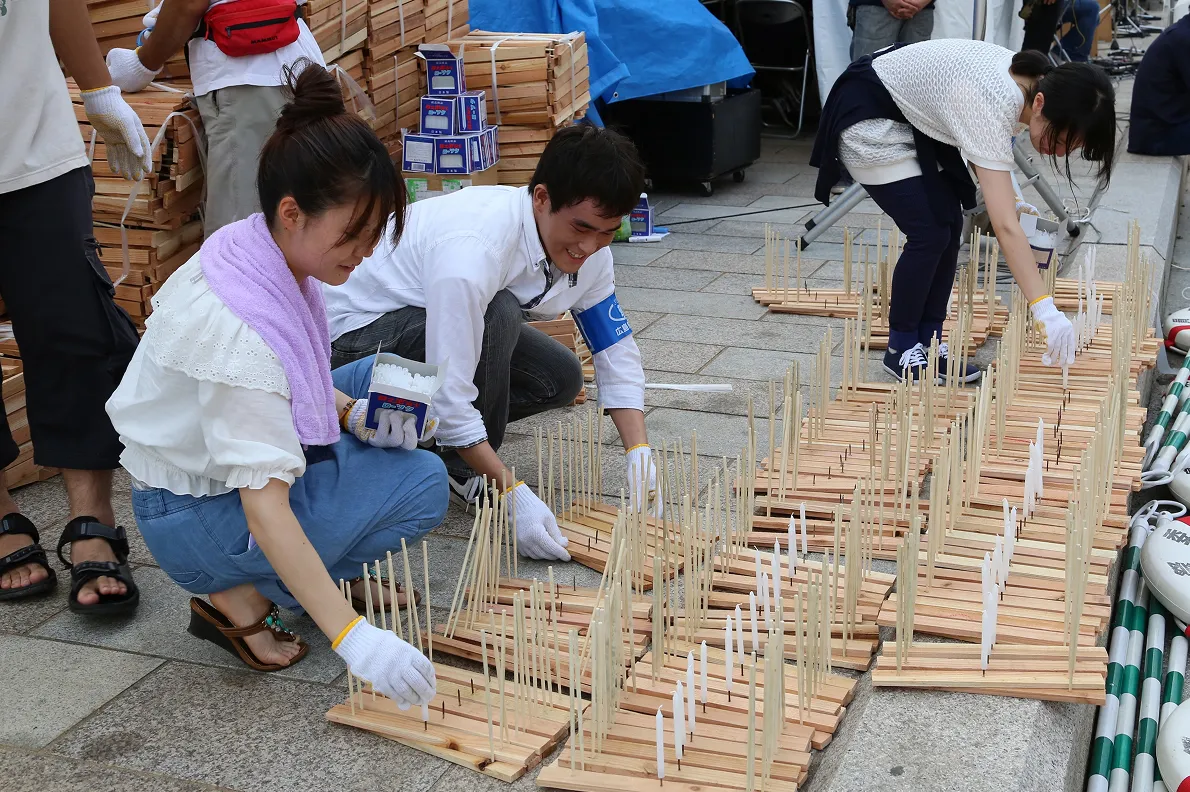
Originally, the area that is now Hiroshima Peace Memorial Park was one of the city's busiest downtown districts. Many of the shops that did business there relocated to Hondori and elsewhere after the atomic bombing, and are still in business today. The volunteer work of Lantern Floating has been carried on mainly by the people of that former shopping district(the Hiroshima Central Shopping District Federation).
As the number of long-established shops decreased, it became difficult for the shopping district alone to continue the volunteer work. Since 1999, citizen volunteers (the Citizens Supporting the Lantern Floating) have also been helping.
The lanterns were made by the "Fukae Senior Citizens' Club" of Etajima City until 2021, and since 2022 their production has been entrusted to a company that makes Bon lanterns. The lantern boats are operated by the "Hiroshima Inland Water Surface Fisheries Cooperative."